The Day After

On Tuesday, October 21st, I watched ten or so ICE officers pass by the gallery. My desk is right next to the window, and I spotted them immediately as they walked by with their balaclava face masks, their bulletproof vests with “POLICE” written in white, walking in a group to intimidate. A few hours later, when it made the news, I found out that there had been a big ICE raid in Chinatown. They only arrested five people, but their presence was so much more malicious.
Today, the day after, I walked around where there used to be people selling counterfeit handbags. I circled the block in what felt like an exploration of emptiness, of aftermath.
On a normal day, tourists and locals occupy the sidewalks to buy counterfeit purses, wallets, jewelry, sunglasses, and more. I love the atmosphere, especially on Saturdays even if it slows down foot traffic. The bags are splayed on blue and yellow tarps. There are hundreds of colorful items assorted in rows, and I watch and listen as people bargain for lower prices or deals. I admire the ridiculous desire for brands, even if “fake.” Right outside art galleries, there is this whole ecosystem of merchandise that feels like an artwork as well. It’s bright and lively.
Today, the silence and absence of it was noticeable. The breeze swept right through the streets, easily, making it feel more hollow and empty. There were still a couple vendors, cautiously holding papers (like artwork checklists) with the list of bags they had available, quietly asking - if you made eye contact - “handbag?” or “wallet, Miss?” In various conversations being had on the street in different languages I could hear the word “ice,” and I could see them pointing to the police cars around. I asked a man, who I found out was from Gambia but was now a US citizen and has lived here for 35 years, how he felt. We spoke for a bit, he was unafraid and perseverant, and it gave me hope.
I then walked on the stretch of Canal street, behind the Banksy Museum, where there used to be a group of Rastafarian-wannabes who would sell weed from large Mason jars and sit on camping chairs watching the day go by, smoking large joints and listening to Reggae. This area is right near the Vintage Army store that also always has a strong musty smell that can only be described as old vintage clothes. The whole corner was mostly absent now, but there were still a few stragglers who seemed to be similarly curious about the aftermath, investigating.
Sometimes, you only notice something in its absence. That’s what missing really is. What once was common, habitual, and part of every day life is now gone. I was often worried about those who sell handbags in the streets getting arrested, but I also didn’t pay too much attention to them. I ignored them like I would any salesman or solicitor asking for my signature. But, they are a part of the everyday fabric of life here, and my routine of going to work, and I miss it already.
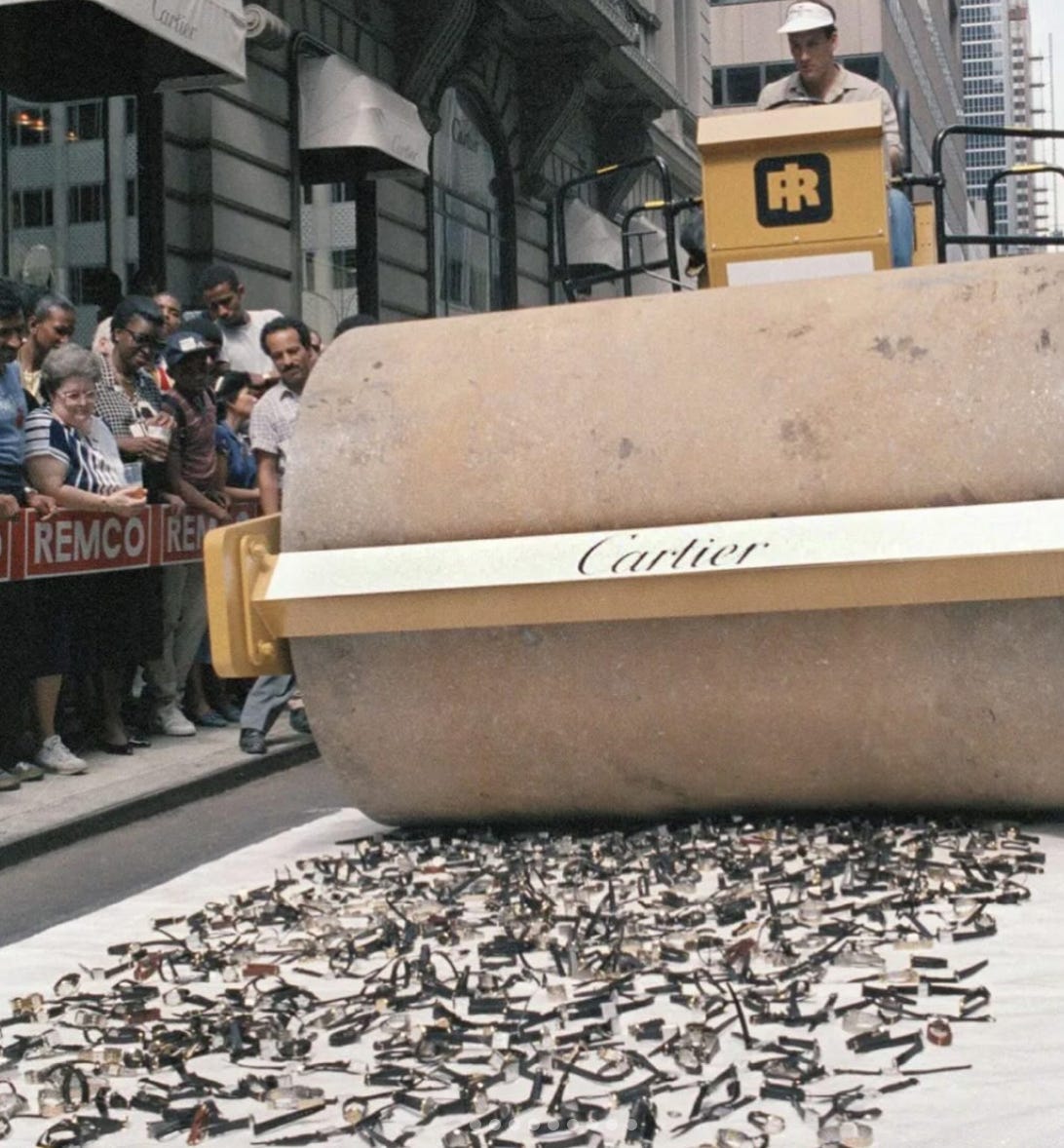
Knowing New York, there might be the same hustling crowd selling handbags in a week or two. Things could go back to how they were. I learned, thanks to a great Instagram account called the Canal Street Research Association that on the morning of November 12, 1986, thousands of counterfeit Cartier watches were crushed by steamrollers on Fifth Avenue. What a sight the photo brings, a strangeness imagining that all these fake watches were such a big threat. And a sadness that can only be made better knowing that it didn’t stop people from doing the same thing years later.